I painted Olivier as part of a demonstration for my Wednesday online class. The month’s theme was “Alla Prima Portrait Expressions,” focusing on capturing dynamic emotion in a static image. The aim was to avoid a staged, awkward or flat appearance while conveying the subtlety of expression through brushwork and texture. The added challenge was completing the piece within a two-hour timeframe.
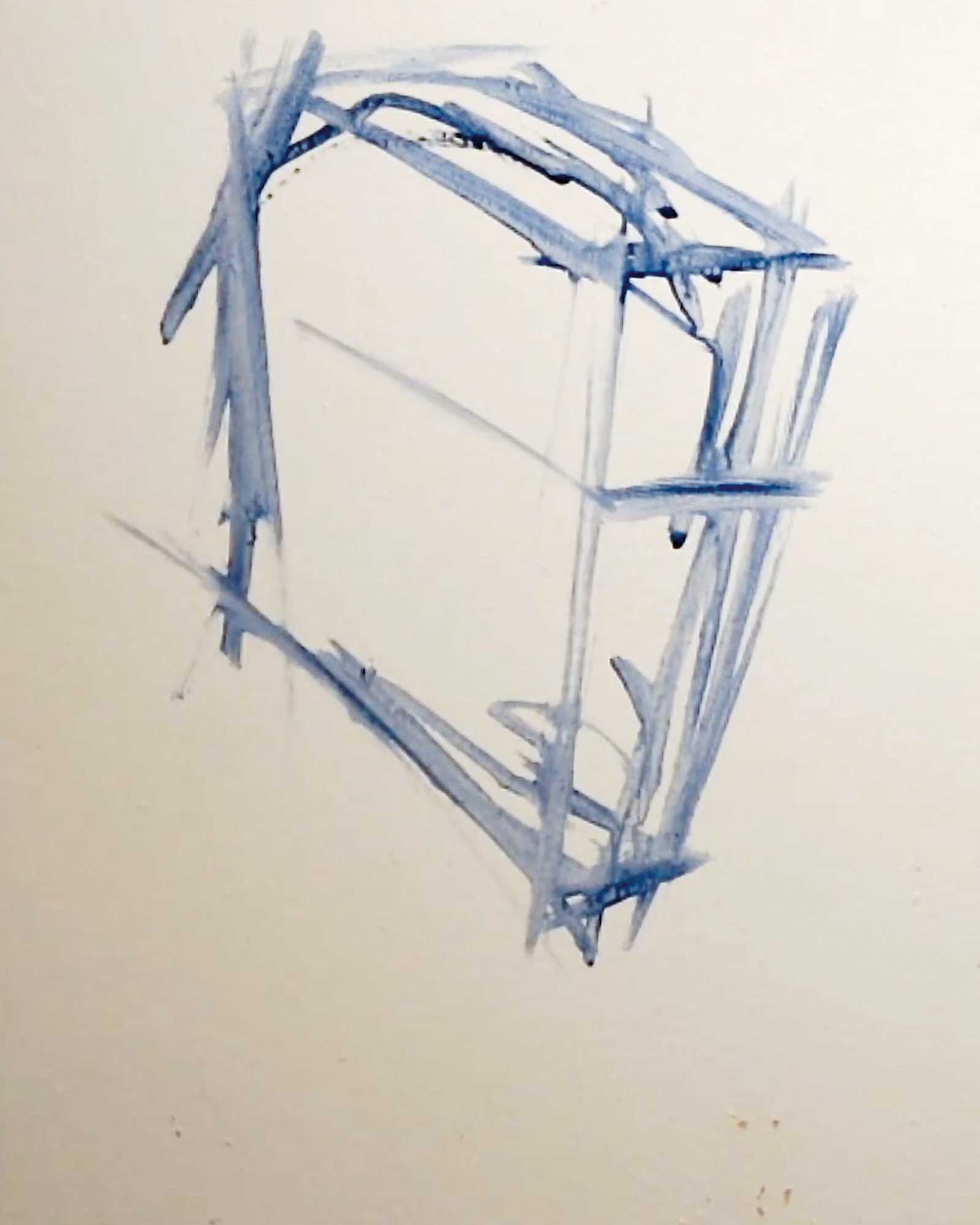 Stage 1
Stage 1 At the start of a painting, I always assess how much time I have and what is realistic within that window. This determines the scale, composition and approach. I begin with a loose sketch to establish the position and basic structure.
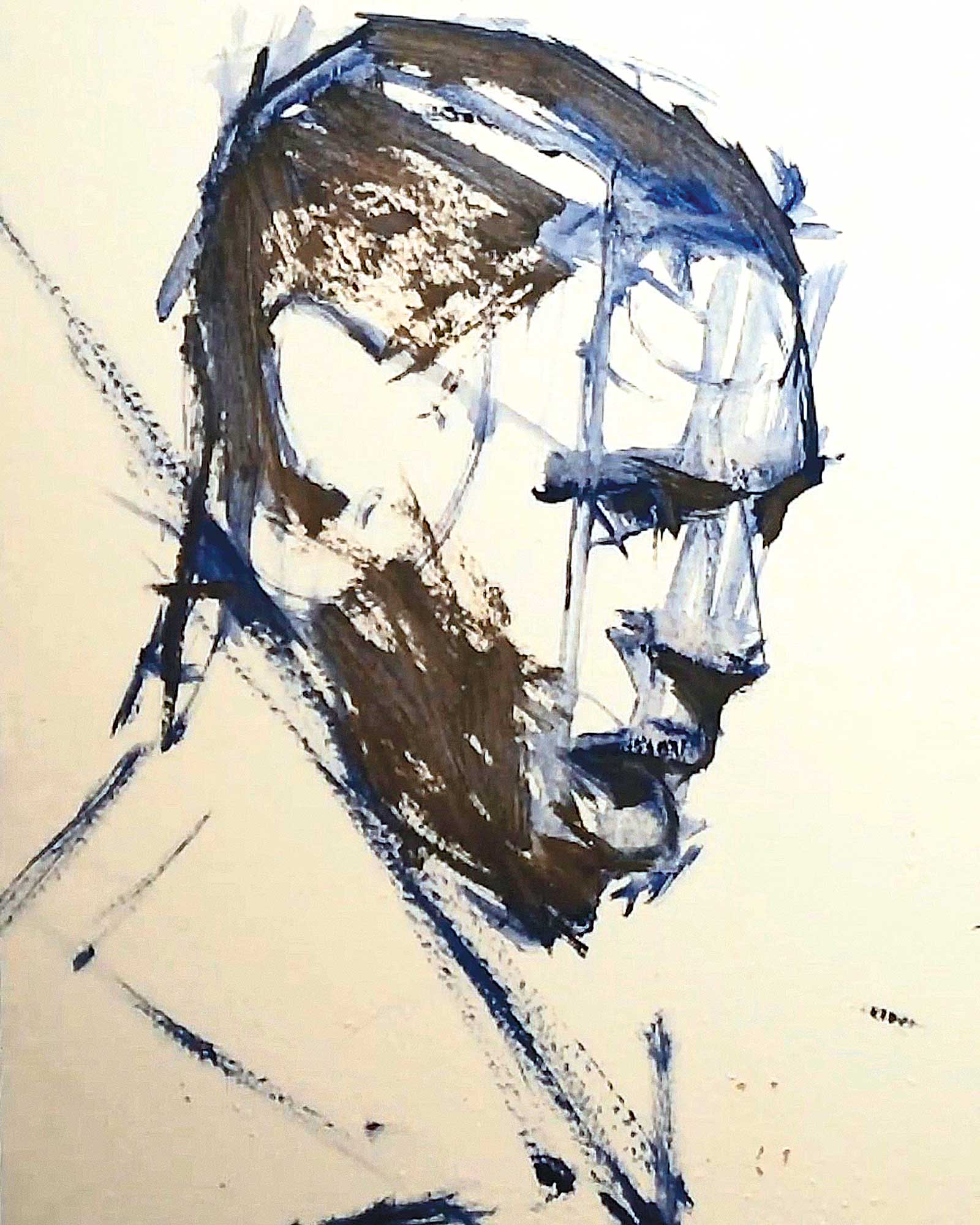 Stage 2
Stage 2 Since this is an alla prima sketch, I aim to work directly without much drawing. The focus is on large masses of value and color, loosely blocked in. I use a limited palette of seven colors: ivory black, ultramarine, cobalt teal, titanium white, cadmium yellow light, cadmium red light and quinacridone red. This primary palette is an excellent teaching tool. It is simple yet chromatic enough to mix whatever I need.
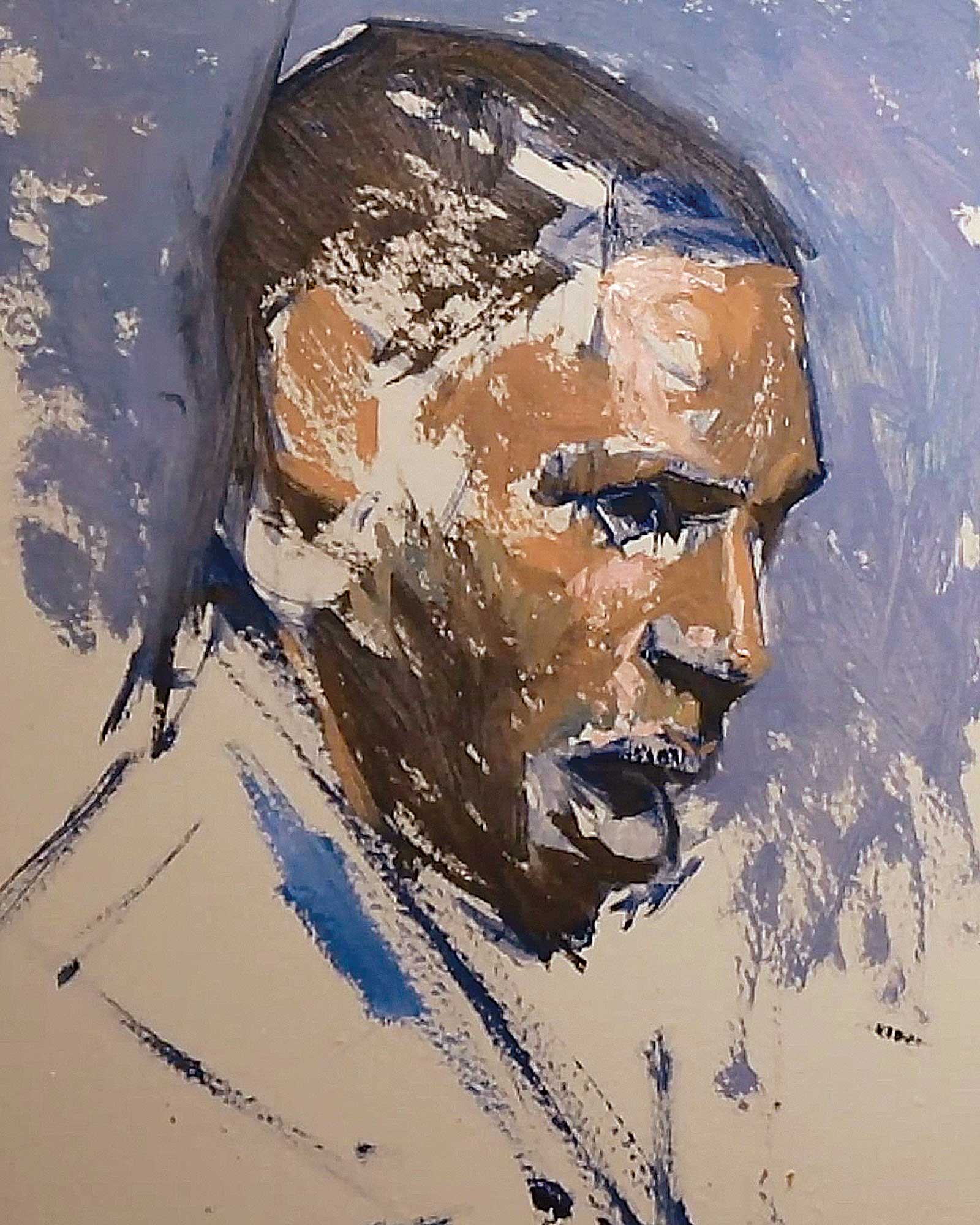 Stage 3
Stage 3 With the basic structure in place, I block in the major darks, midtones and lights. My goal at this stage is to simplify the process by reducing complexity and going for color averages. I paint as though my subject is slightly out of focus, concentrating on relationships rather than individual features. This stage lays the foundation for the color variation and detail that will come in the next step.
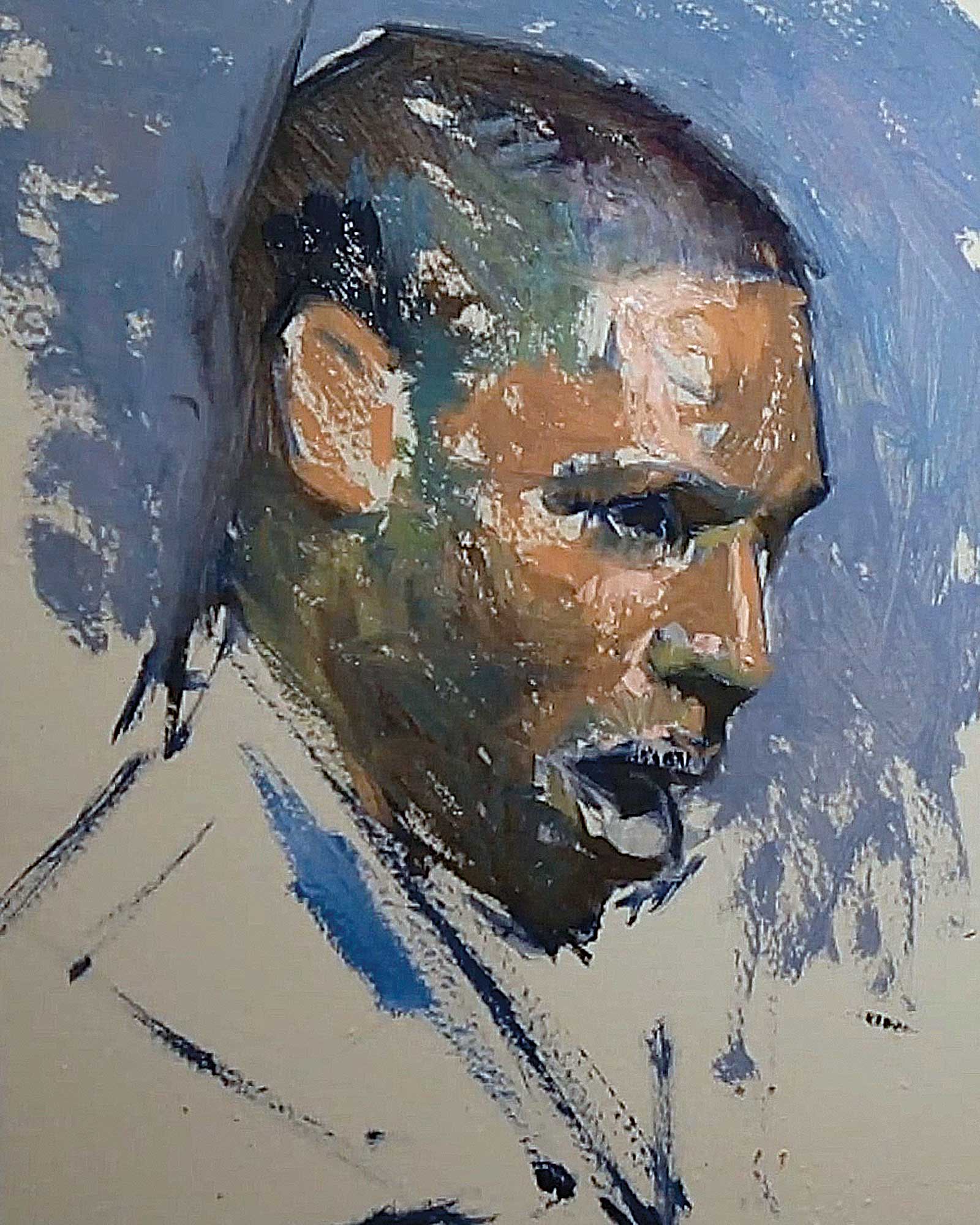 Stage 4
Stage 4 Here, I work to establish the core relationships and expression. This means focusing on proportions, value structure and average colors, while deliberately avoiding “locking in” any feature too soon. This is the most critical stage, and I take care not to rush it. At this point, achieving a perfect likeness isn’t essential; what matters is capturing the core feeling. That’s what I focus on and latch onto during this phase.
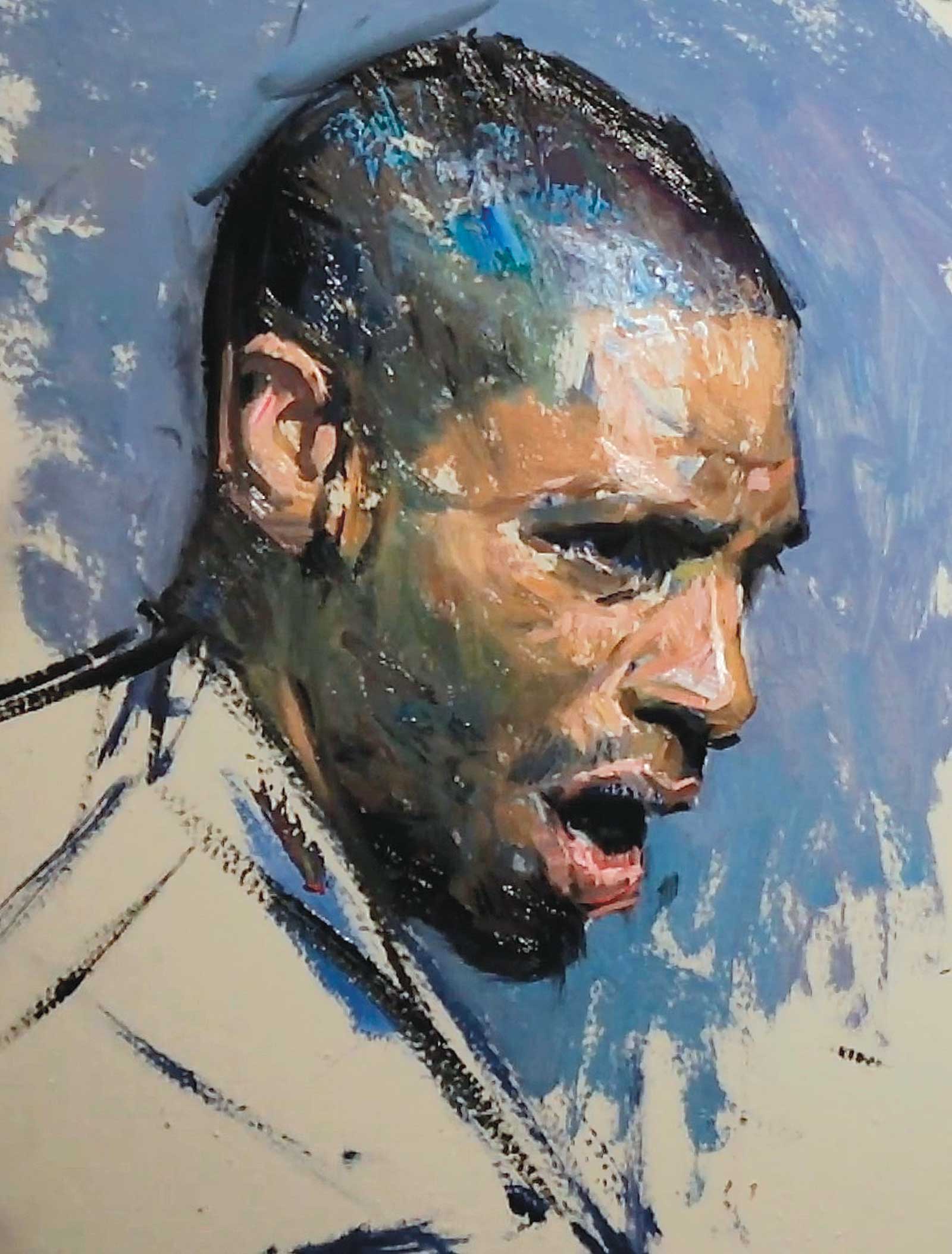 Stage 5
Stage 5 If the earlier stages have been successful, this allows me to refine and expand the expression. My attention becomes more precise as I add color variation, refine edges, incorporate texture and build up the forms. I push the value and color range further by deepening the darks, brightening the lights and enriching areas of saturation. As I do this, I try to turn up the focus dial on the facial features, bringing greater clarity and definition to the forms.
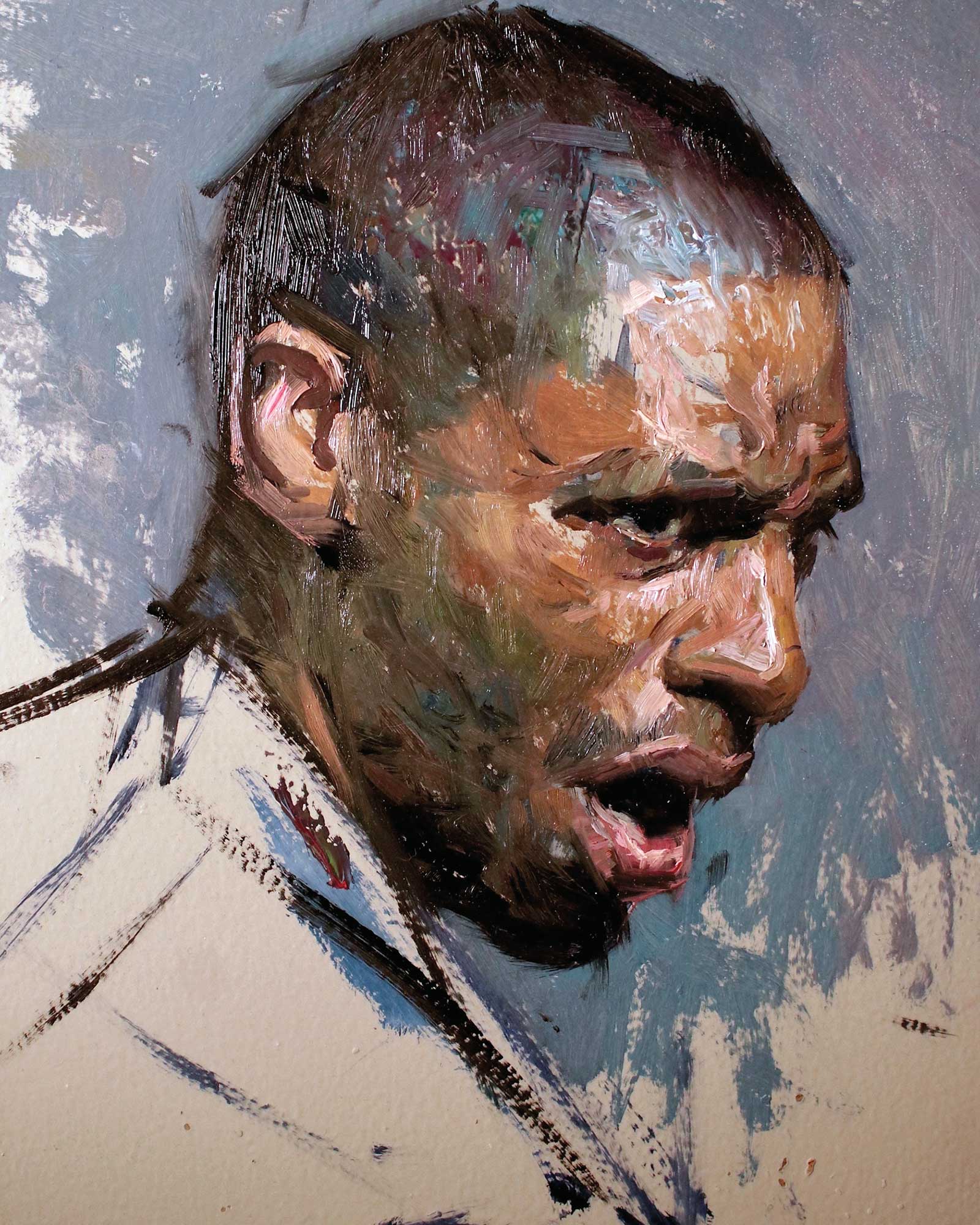 Stage 6
Stage 6 Finished Artwork The final stage is all about edges, highlights, detailed brushwork, fine-tuning and establishing the focal point. Ironically not much painting happens here, as this phase is mostly about observation. I make minor dabs and adjustments while staying quiet and still enough to clearly see what is needed. My entire focus is on capturing the expression. Completing a two-hour alla prima painting is like playing a sport. The timer acts as an opponent, and the skill lies in working efficiently within its limits. You never know for sure if you’ll achieve your goal by the end, but that unpredictability is part of the challenge and the fun. It’s never wasted effort because the insights gained from one painting always feed into the next. The key is to keep practicing.
Dominique Medici is a Seattle-based figurative painter trained in London. Her work has been exhibited internationally and is included in private collections across the U.S. and Europe. She has received awards from the Portrait Society of America, Art Renewal Center and Oil Painters of America, among others. A dedicated educator, Medici teaches workshops and online classes.